Tuesday, February 23, 2016

Troy


Bursa to Troy

Travelling from the North Western direction, we saw vast masses of land covered with olive trees. Also some areas were left to fallow for more intensive planting later in the year.
Marmara sea was seen in the background and this strip was inundated with many inland lakes like Ulubat Golu.


Agriculture is the mainstay here.


Turbines energised by wind is also an important source of energy,
We saw stretches of land dotted with huge turbines.
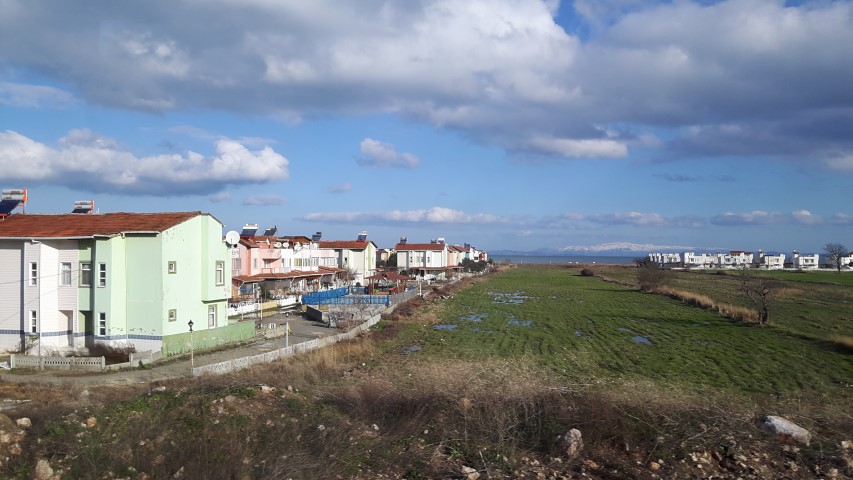

Nur told us that seaside properties cost more than inland ones and she cheekily related that girls used to inherit seaside properties because they cost less than. But now the opposite has occurred.

Canakkale is a sea port town close to the historical town of Troy where much Greek and Roman influence are established. These are also memorial sites for filming Anzac wars. Ancient Greek mythology ruins as far back as 6 thousand years ago.


18 March annually was designated to remember war heroes here.
Why do people fight ? 

The 4 hour journey to Troy was not done without Nur playing the movie for our understanding of the place.


She played the latest version of the movie and the military scenes actually brought the place alive to me. You will never get tired of the love of Helen of Troy, the beautiful ladies, the episode of Achilles heels and the agony of kings as they fall into the hands of their enemies.


There, we travelled far and wide just to have the experience of seeing the wooden horse albeit not the original one. The breeze was chilly and no number of layers seem to be enough. We were at least dressed 3 layers under our skin. That still seem insufficient. 
I must admit that it is difficult to enjoy when too cold.

At the ruins of Troy, it was just history. Remnants and ruins to show the weaknesses and strengths of empires and wars. But the present generation still do not learn. Nations today is still fighting for power and fame causing unnecessary deaths and sadness. This has made travelling difficult and worrisome too. Nur was saddened that the tourism industry of Turkey has been badly affected by the recent killings and bombings as tourists are turned away from such threats.


We were escorted to witness the greater ruins and learn about the historical majesty back then.
Greek and Roman dominions were clearly depicted in the place.


Apparently Troy had been destroyed several times due to wars and earthquakes and reclamation.


There are markings to denote the position of the various times the city was rebuilt after destruction each time.


This picture speaks it all, 
It was educational to learn of the construction each time. 


The ruins do have a story behind it as they may indicate squares and meeting places for people to congregate and consider. Troy today however has nothing to show off as many nations in the past had a share in the archaeological findings and it is even believed that Berlin today has the original Trojan horse. What an irony.


Travelling out of Troy we stopped at an outlet selling olive related products and I can vouch that the lip gloss sold here is indeed very effective. It did a lot of good to my parched lips. Many other health products including bottles of the finest olive oil are found here.

After a good lunch feeding on sea breams, we reached yet another historical site with strong Greek influence; Asklepion.


Renowned for its healing activities, this place was known for rest and healing.
 Many are believed to receive healing feeding on the fountain water found here.


If I remember correctly, this was the site of the library and the strong Greek influence are seen in the pillars left behind.It was already evening when we reached the place and the chilly breeze took a toll on me.


Perhaps this was the most uncomfortable part of the trip when we had to rush to Izmir, the third largest city of Turkey. It looks very progressive but we hardly had time in this petroleum refinery centre. So we hardly saw the place except for being rushed to see the clock tower built in 1901 by a French architect.


That was the coveted landmark that was shown to us and it did us not much good for we were tired and hungry by then. We were further made upset when we had to travel another hour before we had dinner at Le Bleu at Kusadasi. That evening coincided with the first day of the Lunar New Year but the food was not what we wanted.


But the thoughtful Zaiton made us happy by providing the lou sang for us. We made the most out of it albeit missing the pomp and fuss which we would have experienced back home.


The hotel which hosted us was not so friendly. No drinking water and the room was small. The only consolation was the beautiful sea behind us.
Day three was indeed a long one.
But we saw Troy and Asklepion.

But we were secretly excited for the next day's travel to a biblical land.

Sunday, February 21, 2016

Cumalikizik

Try pronouncing it with speed.
Not easy.
It's under UNESCO world heritage keeps and we were told it was an optional tour as our afternoon was free.
Reliance has a way of getting scot- free by offering the carrot without being responsible for it. How can one travel thousands of km and not see it?
So it's US25 each for the visit. Fortunately all of us were prepared for such surprises.

There was no regret for the brief and historical visit to the quaint centuries old village. Everything feel ancient and old as if you are brought back to times of the Ottoman empire.


They say a picture speaks a thousand words. I guess the picture above speaks it all. The architecture, stones and wood (except the restored portion on the left) can actually relate to movies of that century. So, it's no wonder movies are still shot here and the natural landscape makes filming perfect.


On the cobbled lanes and passageways, tourists flocked to see the local produce and common cuisine and souvenirs.


It's dates and olives and others, all seasoned and packed for convenient consumption and sales.


We were very attempted to consume but in the end gave in to qualms.


Perhaps the first experience of snow on you makes it almost impossible to forget the place. It was freezing cold and the precipitation was in the form of snow. The girls went hysterical with the precipitate snowing on them. Esther must be hallucinating in glee. It was a ghost of a chance and therefore so unforgettable at that moment. Later, when we travelled to snow-strewn destinations, this experience must have faded from her memory.


Strolling on the hard rock; probably marble was not easy on the knees in the cold. It is true the cold does act cruelly on the knees.
The lonely dog with only a layer of fur on it could make it there.
How God works, we often wonder?


Dad was taken in by the abodes and the timber slapped in between the gaps was a good guess. What was the function of those timber? There must be several reasons for their existence. The family argued over it and in the end agreed that it was for shield and warmth.


We trudged through the hard path not complaining much as we wanted to read the story of old through the buildings.
Any lesson to learn?


I managed to have a peek at the inside of a building and saw a well in the  middle of a small square. My imagination went wild deciphering the use of the well. Providing water for consumption and wash, the place must have been a place of congregation, talks and common gatherings.
Where there is water, there is life.


The local womenfolk are into knitting and they reminded me of Emily.
But these items are of no use in hot Singapore.


Strange but true. These porcelain items must be a connection with the silk road trade here. The Chinese must have made their way here and exchanged goods. Barter trade is as old as life. Of course, you use the Lira to buy now.
It's probably 30 Lira.


Sara must be grateful too for the expedition. She was the reluctant one, complaining at the long travel and missing her fiance so terribly that we concluded that she was suffering from separation anxiety...

Tomorrow I tell you the next episode.

Saturday, February 20, 2016

Istambul - Bursa

To Bursa
After a pampered evening at Pullman, we rushed out to the coach for a morning's journey to Bursa via a ferry across the Marmara Sea.


Sea gulls swarmed the skies and the ferry ride was pleasant as I watched people of different nationalities congregate at the coffee lounge for hot drinks. The temperature was between 0 - 5 C but it was still tolerable. The chilly breeze was the culprit for the pangs of discomfort. It was actually cold and gloomy but our spirits were not.


Esther sure knew how to handle the cold with her apparel. She loaded well and went tsk tsk tsking me; if you know what I mean. I am not used to carting so much in a trip and I acknowledge some regret.


En route to Bursa , Nur informed us that oil and gas is not found much here and green house agriculture is popular. Olives and tulips are main agricultural exports and the local in the region depend a lot on the revenue from the export of these produce.


Bursa is 4th largest city and is on the European portion of Turkey on the North West. Turkey is truly torn between both the European and Asian sections and cultures differ slightly.
Bursa used to be the capital of the Ottoman Empire and strategically positioned for the silk trade. Today, the construction and manufacturing sectors are blooming but the production of olives is no less significant as we know that the olive is so versatile in food products. There is no oil and gas resource here so to maintain a car can be expensive. A new graduate earns about US400.00.


 Oh lunch is of course the kebab again. Turkish meals are never short of salads, soup ( tomato or lentils) and a meat dish ( fish, beef, lamb) and of course a local sweet which I am never able to handle. But when you are touring, do what the Romans do in Rome.


 Outside the restaurant , we saw a silk market tailored to the needs of tourists. Name the goods... colourful stone-stuffed lamp shades, hand made shoes, tapestry, table runners , clothes but no photography. So no sample to show.
We kept our pockets in tact waiting for better chances later.


Our first stop was the Ulucami mosque, the biggest oldest mosque of Ottoman times built in 1388. Today it caters to worshipers of the Muslim faith and also to tourists.


It was noon and there were throngs of worshipers as Nur said they pray 5 times a day. All of us took off our shoes and covered our heads before we were permitted to enter. It was a good experience as we examine the architecture of Ottoman times and see how history is continued.


 Outside the mosque, I stood and waited for the rest and I observed trading of all sorts happen. The Turkish must be so used to tourists as some of them tried speaking to me in Mandarin while others cheered "Malaysia Boleh". I wondered at their eloquence. The rain did not leave us and we trudged around with umbrellas in the cold.


When in Bursa, the tourists are bound to see another land mark; Koza Han. Apparently, Nur said that the building has been restored several times due to earth quakes and wars but nevertheless still stand tall today.
Koza Han had been the center of barter trade in the past where nationalities all over the world congregate and trade.


 Silk was the coveted product and it must have been along the silk road for it to
flourish so gloriously. We could see the the shop keepers were used to tourists and relentlessly persuading us to enter their stores. Silk products were abundant and the choice limitless.


Yes, there was a countless number of goods but we still kept our pockets in tact for better bargains as we journey through the land. But of course I could not resist a couple of scarves for friends. When you tour, you think of gifts for everyone except yourself. Sounds familiar?

That was the morning visit in Bursa.
In the afternoon we were invited at our own expenses to visit a World Heritage Village ; Cumalikizik where filming still takes place and the old Ottoman village oozed a feeling quite impossible to describe.

To Cumalikizik.