Thursday, July 14, 2016

The Kasuga Shrine

Cradle of Civilization
UNESCO World Heritage Site

Site of some of the oldest sculptures in the land and known as the temple of a thousand lanterns, the Kasuga Shrine of Nara is a favoured spot of the locals steeped in Buddhism and Shintoism. Many come here to offer givings and prayers meeting their spiritual needs. The centuries of worship has made it a hard ground for other religions to penetrate the hearts of the Japanese. 
Clement was kind enough to show us this angle as this spot was originally not included in the package. It is good to understand the steep beliefs of the land.


The entrance to the shrine was labelled and entrenched in a big rock, a natural setting of the surroundings.


As you enter the gates, one cannot but help notice the strings of lanterns displayed. They seemed new; obviously the work of later times and their significance was not explained but can be easily deciphered; that they bring light to spiritual needs.


 We were impressed at the intensity of effort in maintaining the place of worship.
The Japanese are keen and meticulous workers and I would like to assume that they are honest workers too. 
Much care both among the men and women were observed.


Some older structures that needed upgrading were seen to and concerted effort again is observed.


As we continue to walk down, we were further amazed at the countless number of lanterns which truly ancient lined up along the path. Tourists of all nations are seen observing the practices of old; some of which are still practised today. Their beliefs have passed down from generation to generation.


 Rows and rows of old lanterns neatly lined up for the many tourists to see and make conclusions. As I have said, they must be asking for peace, harmony, protection and prosperity.


Further down, we notice the old branches and roots of trees intertwined with the lanterns ; only to remind us of the aged civilization.


True to what I thought, the tablet on each lantern did plead for protection and peace; some even favour. The spiritual needs are indeed genuine, No man can deny the existence of an almighty power.


 Of course, it is not surprising to see the wooden tablets held to panels again asking favours of all kinds; release from ailments; finding life partners, protection, success and everything else. As observed, this feature is even found at local towns and malls.


Some root features are without a doubt a reflection of the age of the place.
To see such an old civilization and place is an experience of a kind.
We are brought back to see how people believed and behaved then.
Are we still the same?


 The spring of hope is surely an inherent feature here; particularly in a place of belief. Many thronged to hold the waters in their hands and drink them hoping for blessings and favour. 


This picturesque representation is more than a thousand words can do.
We left scenic Nara for the city of Osaka to retire for the evening before the next agenda.

To the city.

As can be assumed Osaka is jam packed with people both locals and foreigners and the main activity here is none other than shopping. Like crazy ones, we could not resist the big boys in town; H&M, Urban Research, Nike and it is endless. Dad detested the crowd and wished a thousand times to be back in the countryside.
It was super crowded and shoppers bought as though there was no tomorrow. Osaka is tight alright.


But amidst modernity and change, the old practice for the July 7th legend still remains strong. Young lovers are seen hanging their wishes and prayers hoping all good and bright will happen to them.
This is the uniqueness. Times make change but hope always remains.

The coveted rest was given to us as we parked ourselves in a comfortable hotel.

Nara

The Deer
Nara is the place where the deer runs freely without fear of man. Yes, it is a free frolicking and and life is easy for it. You wonder at its easy going ways and wish you were like it; life without worries. All it wanted was to be fed.


...Home, home on the range,
Where the deer and the antelope play,
Where seldom is heard a discouraging word,
And the skies are not cloudy all day...


Presented with clear instructions of 'dos' and 'don'ts', visitors to this deer park have to adhere to them or they may be chased by the deer. It's the deer's world and we have to first respect it.


Hundreds of them move and play together. They seem to find companionship among mankind. On a sunny afternoon like this. we were even happy to be under the hot sun just to be with them. Many locals too visited the park.


It is no wonder that I was not afraid to go near them; harmless and docile. It was an experience of a lifetime for as far as my memory can stretch, the deer always run away from onlookers and seldom want to be near anyone. So, this Nara Deer Park was surely worth a visit. Little children will truly be thrilled to pieces. I can imagine my Emily here. She will be in tandem with them.


Behind us is a typical village hut with a thatched roof. They offered all kinds of sweets and of course the macha tea ice cream is the all time favourite among us.
Dad sometimes spoils fun by refusing to indulge in them. I looked with interest the green tea concoction of nuts, beans and milk but it was not easy to persuade him. I now confess my regret. I should not have given in to him. 
Next time, I will definitely insist and get it.


The deer congregated at the sound of a whistle for food and bawled with a loud 'baa'. They are so well trained towards the instruction of mankind and it is indeed a strange experience to see them respond in this way. Well, it is best not to be in their way where it is meal time. You may be trampled.


At Nara, we also had our first Japanese local treat. 
Rich rice with cold dishes to go with accompanied by the miso soup of course. 
First treat in Japan, the simple meal seemed good. 


Leaving the restaurant, we were introduced to a variety of local products ranging from art and craft to goodies both sweet and salty and finally of course souvenirs. The products are finely made and the prices are in sync with the standard. The Yen has gone up against the Ringgit and it was expensive when converted. When you travel, we must try to avoid conversion or we might land up with nothing to eat and buy. Agree? But my dear husband has only to look at me for me to comprehend his stand.


So immaculately sewn, the purses and wallets are an eye catcher. We asked the tour guide if it was wise to purchase it here or elsewhere and he intelligently replied that the products are indigenous to the place and we may not get them in another place. So, the decision was on us again. As Nara was our first stop, none of us thought it was wise to purchase anything here without giving a chance to other spots. So no business concluded.

After the bento lunch and the deer park walk, Clement, the Malaysian tourist guide who had his tertiary education in Tokyo before gathered us for a look at the cradle of one of the oldest civilization in Japan.
It was the Kasuga Temple of a thousand temples.

To the cradle of civilization.

Wednesday, July 13, 2016

Practices

The Value System

Some values are cultured and nurtured through generations. Both good and bad habits die hard but when the whole nation embarks on a certain value system it can work. In Japan, the public toilets are an indication of their people's attitude towards hygiene and and manners. Not that I have seen a lot of the world, but the rest areas and rest rooms of this nation put Japan above everyone else.
When in Rome, do what the Romans do.
So, visitors to Japan get to experience the pleasure of clean public toilets.


The rest area is spotless. We do not see any garbage anywhere except in the recycling bins where both locals and tourists take concerted effort to make sure the right garbage is dropped into the right bin. Not only is cleanliness highly revered, right thinking comes into place in Japan.


Look at this indigenous practice.
To recycle water used for washing hands.
 The cistern contains recycled water for reuse to flush away human waste.
This is etched in my memory.


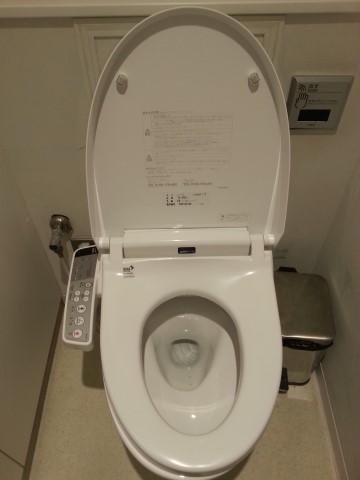
Everywhere we went the toilets provide seats that are clean and clear instructions given on how to use them. This is perhaps one of the rarest times that I can actually bring myself to sit on the seat without qualms. Why? They were so clean with no marks of steps on them and you know you can trust them.


 Also, there is a washing mechanism for cleaning after big and small businesses. making it a most hygienic experience. This has caused a challenge to my dear husband for I am suggesting that he place such a feature for our home use. 
Do you notice the baby seat? It is attached to the female toilet. The Japanese are a thinking lot; always making life better for everyone. This is first class mentality for first class people. I also want to be first class people.


 What do I have to say about this?
Bicycles are parked freely without being chained. It can only mean honesty is practiced here . How good it is to be confident that you can go to work on a bicycle, park it somewhere, take the MRT and come back to the same spot to look for it again. Safe and sound.
Look at the sparkling clean lanes. 
Cleanliness is the norm.
No trash, no rubbish bins.
Where we are, there are plenty of bins with litter everywhere.
So, perhaps there should be no bins for garbage.
On the coach we were in, we were all given daily plastic bags to contain whatever garbage we have collected and deposit them in the privacy of our hotel rooms.
Even tourists are not spared.


At Takayama, not only the pristine town was spotlessly clean but the drains are also flushed by streams of clear water running down from the nearby hills. We were truly impressed and one of us even mentioned that the waters are fit for washing clothes. What a drastic difference from the drains back home. This environment can ultimately refine a human's adaption to meaningful living. It is so prim and proper. Teachers love this perception of right behaviour. True to it, there were a few teachers on the trip and all said "it is good". Why can't we have it too?


On this trip, I observed that the locals love to have water features akin to living waters both at places of worship and at home. People would hold the water in their hands and drink them, as if pleading for favour from the gods. Of the many temples visited every one had a feature like this; an indication of spiritual needs.


Another cultural practice  is attaching wooden tablets to lanterns and structures alike which hold wishes and prayers for good fortune, protection, favour in life. Some traced back to decades and it is very interesting to note that the locals are just into it as before.If not mistaken, 
I spotted them at malls too.


People in love have much to ask for in their courtships. This wishing tree coincided with the celebration every 7th July when legend has it that the cowherd meets his fairy from the moon annually. This adds excitement to the air and so it is common to see wishing trees along streets, pavements and malls. The Japanese lovebirds must look forward to this annual affair.


This society has also to vent its hard life with some entertainment too. It is not surprising to see the retirees and even young ones involving themselves in slot machines offering games and gambles.


Peeping through tinted display windows, I saw many glued tightly to the screen for winnings and achievements. This is the only thing seen that I cannot agree to. That also leads me to conclude that there may be many social evils that I could not decipher clearly but that is not surprising. How can only good things happen leaving the unpleasant ones non existent?

But the bigger truth is that the Japanese are a cultured lot with manners unmatched.
Tell me how you feel when they go bowing at every instance for favour and agreement?

 Nihon ga suki desu.

Tuesday, July 12, 2016

Great Central Honshu

The Trip


Never having a chance to visit the land of the rising sun before, the trip to Central Honshu was a much coveted journey. On a 9 day trip, Reliance took us to many picturesque spots of Japan stretching across Osaka, Nara, Kyoto, Kanazawa, Takayama, Shirawago, Matsumoto, Mt Fuji and finally Tokyo. The places seem many but the daily journeys were tolerable and in fact enjoyable. There was little fatigue though waking up at 6 am everyday was the norm. It was also easy to wake up at the so called unearthly hour as the skies in Japan grow bright as early as 430 am making it right to be called the land of the rising sun,
Unlike Turkey, the people we saw here are mainly from the far eastern corners of Asia with Chinese Language characters posted everywhere. In fact many of our co travelers are able to get around pretty well with whatever little Japanese we had mastered.
" Nan desu ka , Konnichiwa, Doomo Arigatoo gozaimasu, Ohayoo Gozaimasu, Doozo, Konbanwa " were enough to get us understood ! The Japanese I learnt in my younger days was put to good use though I should have mastered more.
Steep in history and cultural practices, it is indeed true that the Japanese are a cultured lot with steadfast values that put them above many in society. These unsaid values are lived out by the indigenous Japanese and we could not help but admire some practices so well carried out some of which include recycling, honesty, cleanliness and thoughtfulness.
As we ploughed through the streets, villages, cities and grounds of Central Honshu we noticed vividly how the Japanese have been so disciplined in their daily practices which will be shared in the next blog.
You have to be there to see how carelessly we have lived and we also have to be there to realise indeed Malaysia is a land of plenty and comfort minus some commendable attitudes.
So, we talk about it tomorrow.
Oyasumi Nasai.